


Quick Facts:
- Cost: Varies, typically between 600 AED and 2,500+AED.
- Duration: 45 to 60 minutes, on average.
- Candidates: Used for both men’s and women’s hair conditions.
- Targets: Balding or thinning regions on the scalp.
- Procedure: Non-surgical, minimally invasive injections.
- Success Rate: High, generally between 75 and 95%.
- Sessions: At least 3 or 4 sessions are recommended.
- Downtime: Negligible, around 1 or 2 days at most.
- Pain Level: Mild discomfort, between 2 and 4 on a 10-point scale.
- Effects Life: Varies, typically between 6 months and 2 years.
Have you noticed your stress levels rise because of issues like hair fall or baldness? Hair conditions have a significant influence on self-confidence and psychological well-being. There are solutions, many of them, but it is very hard to find procedures that are both effective and safe to use. The task is much easier with some professional support and reliable information, however. The experts at Enfield Royal Clinic Abu Dhabi put together this guide, focusing on only one procedure, for this exact purpose: to provide readers with the necessary support and information, so they can choose the Best PRP Hair Treatment in Abu Dhabi.
Table of Content
What is PRP Treatment?
PRP is a potent substance with many valuable applications, including non-invasive hair restoration procedures. Platelet-rich plasma stimulates and repairs dormant, damaged, or otherwise unhealthy follicles, which are most often at the root of all hair loss. It also improves circulation towards the scalp to boost its health and hair growth. The results are natural-looking, dense, and strong hair that covers all the regions affected by hair loss (bald spots and hairline, for instance). This mechanism allows us to effectively treat almost all early to moderate-stage hair issues that affect follicles.
How Do PRP Injections Work?
We have covered enough of the basics now to discuss exactly what these injections do and how. The key components of these treatments are the platelets, which come from the patient’s own blood. We process some blood in a centrifuge to separate the platelets we want from the rest of the ingredients and concentrate it into the liquid content of the blood (i.e., the plasma). Once that’s done, we can simply extract the enriched plasma into injections. What makes these platelets special is the high amount of growth factors in them. These are bioactive elements that, when concentrated in an area, trigger cellular regeneration and repair follicles.
What Hair Conditions Can We Use PRP For?
As we mentioned, these injections can be used to deal with many different hair conditions. Here are a few of them.
- Androgenetic Alopecia or Pattern Baldness.
- Alopecia Areata.
- Traction Alopecia.
- Thinning Hair.
- Stress-related Hair Loss.
PRP Hair Treatment Cost in Abu Dhabi:
The PRP Hair Treatment Cost is between 600 AED and 2,500 AED for a single session. This range changes frequently, normally due to the influence of factors like the number of sessions required to get the best results, the area or severity of the condition, and any additional procedures used. Here is a helpful breakdown of the expenses involved in these treatments.
| Components | Prices |
| Consultation | Starting around 250 AED |
| Hair Therapy (Single Session) | 600 AED – 2,500 AED |
| Hair Therapy (3 Session Package) | 2,000 AED – 6,000 AED |
| PRP + Microneedling | 700 AED – 2,500 AED |
Who Makes An Ideal Candidate For PRP Hair Restoration?
This restoration treatment can be safely used on any kind of patient, man or woman alike. However, specialists say that there are some individuals, with particular characteristics, who benefit the most from such treatments. Here are some of the key characteristics they mentioned.
- Early stages of hair loss or thinning.
- At least some active follicles in the scalp.
- Individuals with androgenetic alopecia.
- Otherwise, good mental and physical health.
- Reasonable hopes and clear goals for the treatment.
- Patients who wish to improve their hair transplants.
- Those who prefer non-surgical solutions for health concerns.
People Who Should Avoid PRP Treatments
Just as there are ideal candidates for this procedure, there are a few who are not. The following is a list of conditions and situations when experts advise against this particular treatment.
- Chronic skin conditions or infections on the scalp.
- Blood disorders that require the use of blood-thinning medication.
- Individuals with completely inactive follicles or severe baldness.
- Serious autoimmune diseases or untreated thyroid disorders.
How To Prepare for PRP Therapy:
Patients can do a lot in the days before their treatment to minimize the risk of unpleasant complications or unsatisfactory results. Here are some things we recommend for this.
- Avoid blood thinners and supplements for at least a week.
- Refrain from alcoholic beverages or nicotine products.
- Don’t use dyes or styling products for your hair.
- Drink at least 2 to 3 liters of water every day.
- Take care of your diet and eat nutritious foods.
The Key Steps Involved In A PRP Procedure:
We’ve observed at our clinic that patients are far more comfortable and relaxed on their visits when they know all the important details about their treatments. For that purpose, here is what happens inside the clinic for a standard PRP hair treatment.
Collecting And Processing The Blood:
A trained practitioner will draw around 10 to 60 ml of blood from the patient’s arm. This sample is processed in a centrifuge (spun at specific controlled speeds) to isolate the platelets along with the plasma from the other components that are not needed for the treatment.
Making The Injections:
The processed plasma is removed into injections and set aside. Sometimes, specialists might add a special activator to the plasma. This is a chemical, like calcium chloride, that interacts with the platelets to release the growth factors.
Preparing The Scalp:
Doctors sanitize and mark all the target areas of the scalp (bald spots and all the regions with thinning hair) for treatment. They apply a numbing cream or local anesthesia to desensitize the scalp during the injection process.
Administering The Treatment:
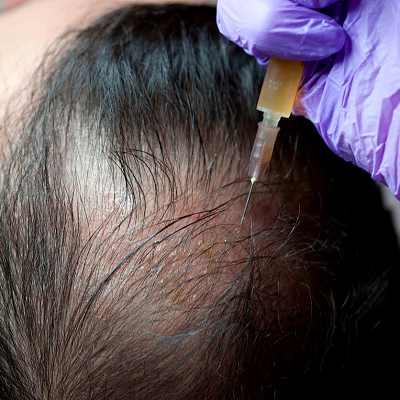
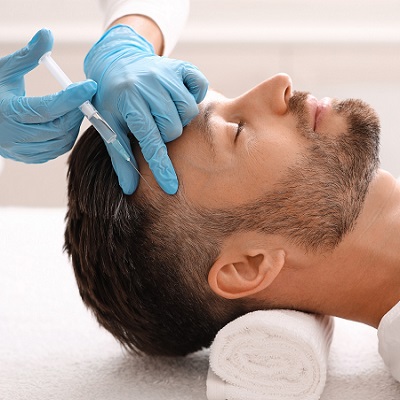
The specialists inject the PRP into the superficial layers of the skin where the follicles are present. They use a fine-gauge needle to spread small amounts of the plasma around the target areas.
Important Considerations For Post-Treatment And Recovery:
The hair specialist distributes the PRP evenly between all the failing hair follicles, and afterwards, they clean the skin, usually with a mild antiseptic to minimize the risk of infection. Some tenderness or itching is normal at this point as the effects of the anesthetic begin to wear off. Specialists generally prescribe topical medication to deal with these temporary side effects. Patients are allowed to return home or to work after a final cursory inspection, given there are no unexpected complications.
Useful After-Care Instructions:
Your doctor will give you some instructions regarding post-procedure care before you exit the clinic; a few of these we will mention below.
- Do not wash or wet your scalp for a minimum of 24 hours.
- Avoid touching, rubbing, or scratching the treated areas.
- No hot showers or saunas for the first 2 or 3 days.
- Protect your skin from direct sunlight or UV exposure.
- Keep your head elevated when sleeping to reduce inflammation.
- Only use the prescribed medication for pain management.
Results Timeline For Hair Restoration:
The effects of these treatments are not immediately visible, though PRP starts its work almost as soon as it is injected. The benefits develop over time, becoming more and more prominent as they do. Here is a simplified timeline of events after a typical PRP hair procedure.
| Time | Results |
| Weeks 1 – 4 | Shedding might intensify temporarily as dormant hair gets pushed out by the healing follicles (also known as shock loss). The injection sites might be swollen and itchy. |
| Month 1 | The shedding should subside somewhat along with any common side effects like inflammation, irritation, or pain. |
| Months 2 – 3 | The improvements slowly become more visible with early signs of new hair growth. Hair follicles get healthier due to the growth factors and produce stronger, denser hair. |
| Months 4 – 6 | Noticeable improvement in hair volume and growth. Most of the bald spots are covered with new and thicker hair. |
| Months 6+ | The results peak and stabilize, and hair growth continues naturally. Some specialists recommend maintenance treatments at least twice or four times a year to sustain the effects of PRP. |
Key Benefits of PRP Therapy:
- Reverses hair thinning.
- Reduces hair fall or shedding.
- Promotes new growth in dormant follicles.
- Works against genetics-related baldness.
- Improves hair thickness and strength.
- It is non-invasive and needs minimal downtime.
- Autologous treatment with low risk of complications.
- Increases blood supply to the scalp to maintain its health.
- Produces natural, long-term results.
A Look At The Results:
Here are some pictures from trusted patients, showing the condition of their scalp before and after their PRP hair treatment.


Why You Should Get Your PRP Treatment This Summer:
It is much more advantageous to get this treatment in the summer, and here are the key reasons for this.
- Heat Stress:
The intense sunlight or UV exposure during summer can hurt the hair and scalp. A timely PRP treatment can reverse and protect against this damage.
- Faster Hair Growth:
The summer heat increases blood flow towards the scalp. PRP works better with greater circulation, healing, and growing new hair significantly faster.
PRP Hair Treatment For Men vs. Women:
| Feature | For Men | For Women |
| Common Hair Loss Pattern | Receding hairline or thinning crown. | Diffuse thinning on the part and crown. |
| Typical Cause | Most frequently, genetics or DHT. | Genetics, hormonal changes, or stress. |
| Target Areas | Hairline and crown. | The complete scalp. |
| Number of Sessions | 4 or 6 sessions recommended. | 3 to 5 sessions recommended. |
| Additional Treatments | Often paired with medications like Finasteride. | Often paired with Iron supplements. |
Why Choose Us?
Are you struggling with stubborn hair conditions like a receding hairline or constant hair fall? Our qualified hair experts at Enfield Royal Clinic Abu Dhabi have many practical and proven solutions to help you deal with these issues. Here is why thousands of men and women trust us to treat their aesthetic and health concerns.
- A history of treating patients effectively and providing real results.
- A roster of qualified and experienced health-care providers.
- Modern techniques and effective health-care procedures.
- Guaranteed privacy and confidentiality during all your visits.
- A safe environment with a professional team of nurses and staff.
Restore The Volume And Health Of Your Hair Today!
With us, you can get reliable and fast-acting solutions for all your hair-related concerns. Fill out the form below to consult one of our specialists and get the Best PRP Hair Treatment in Abu Dhabi. You can also avail the assistance of our dedicated team of experts and support staff for any questions or concerns you might have about your health or medical procedures. Reach us via our helpline, WhatsApp, or through the chat feature at the bottom right corner of our website.
FAQ’s:
What is the General Price Range for A PRP Scalp Procedure?
Based on the severity of the condition and the collective size of target areas, one session of the treatment can cost around700 AED to 2,500 AED or slightly higher.
Does The PRP Approach Give Effective Outcomes For Hair Loss?
Platelet-rich plasma injections work well, particularly for early-stage androgenetic alopecia and other hair conditions. It has a proven success rate of around 75 to 95%.
Are PRP Injections Better Than Hair Transplant Procedures?
Hair transplants are debatably better for advanced baldness conditions, but PRP is a preferable non-invasive alternative for moderate hair loss and receding hairlines.
When Should You Consider A PRP Hair Treatment?
Platelet-rich plasma works best if used in the early stages of hair loss. So, you should get the treatment as soon as you notice any increased shedding or growing bald spots.
Is PRP Therapy Available For All Genders?
These therapies are what we call autologous treatments because they use the patient’s own blood. They are considered safe and useful for anyone, regardless of their gender.
How Sustainable Are The Results Of PRP For Hair Recovery?
The effects of the therapy are not permanent, but they typically last around 6 to 18 months and can be sustained further with some scheduled maintenance sessions.
Can We Combine PRP With Other Treatments For Greater Benefits?
Combination treatments are not only possible; they are frequently recommended by specialists. Treatments like microneedling and hair transplants are often paired with PRP.
Does A PRP Hair Procedure Have Any Side Effects Or Risks?
Being autologous treatments, they have very little chance of complications. Some common, though temporary, side effects include scalp pain, swelling, and itching.
Is It Normal To Lose Some Hair After A PRP Scalp Therapy?
Yes. Some time between the 2nd and 6th week after PRP, the follicles in the treated areas of the scalp will start forcing older hair out to make room for new, better growth.






 Start
Start Chat Now