


Are you curious about the capabilities of useful cosmetic skin treatments, more specifically the numerous options that are available for ink or tattoo removal? The expert dermatologists and estheticians from Enfield Royal Clinic Abu Dhabi, including the renowned Dr. Manar Elazizi, occasionally get these types of questions from patients. They’ve put together this brief guide to help our readers understand the known functions of such procedures as well as answer a few common queries, such as “Can Laser Tattoo Removal Work on Multicolored Tattoos?” The following sections will describe how laser-based treatments target the different kinds of pigments in tattoos along with some of their prominent limitations and constraints.
Table of Content
Can Laser Tattoo Removal Work on Multicolored Tattoos?
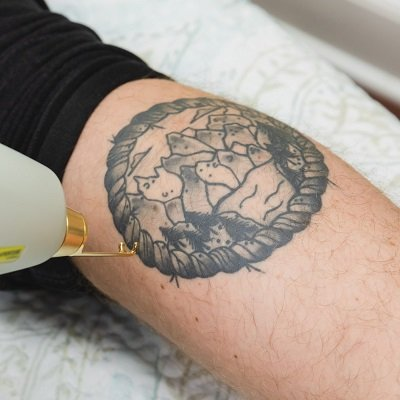
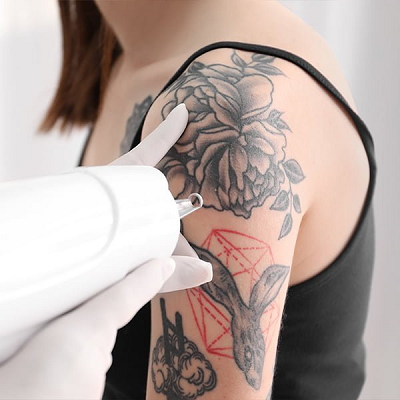
Laser tattoo removal methods are primarily designed for the most common types of inks and pigments, such as blacks, greys, and dark blues. They can be useful for other, more unusual, types of colors as well, though this requires some strategic changes to the techniques and procedures. Here’s how these treatments work for tattoos with different pigments.
Laser Removal Sessions Required For Multicolored Tattoos:
The number of sessions required to remove a multicolored tattoo depends on several different factors, most importantly the specific pigments present in the target tissue, the layering and depth of the ink, and the time it takes for the skin to heal after laser-based procedures for tattoo removal. Most easy- or moderate-level colors, which will be described shortly, need around 4 – 12 sessions. But as the removal difficulty, layering, and depth of the tattoo increase, so does the requirement for the number of sessions 6 – 15+ or more.
Difficulty Of Removal Based On Ink Color:
The tattoo’s color is one of the most significant factors influencing how well the laser therapy works for the mark’s removal. The properties of the pigment decide the quantity and quality of light energy that it can absorb during the treatment.
Easiest (95 – 100% Removal):
Black or dark gray inks because they absorb all wavelengths of light freely and exhibit the most optimal results.
Moderate (70 – 85% Removal):
Red, orange, and dark blue pigments are slightly more challenging as they only respond to specific light wavelengths.
Difficult (20 – 50% Removal):
Greens, blues, purples, and yellows can be comparatively unyielding as they require specialized wavelengths (around 694 – 755 nm).
Most Difficult (Less Than 20% Removal):
White, pink, pastel, and hybrid shades are deemed the hardest to remove, as they reflect most wavelengths of light.
Some Relevant Limitations Of Laser-Based Tattoo Removal:
Although laser tattoo removal is among the most favored methods for getting rid of unwanted ink, it has some important limitations and constraints that need to be mentioned.
- Resistant Colors:
Not all types of tattoo inks absorb laser energy the same way, as we explained earlier. This seriously limits the potency of these procedures for certain multicolored tattoos.
- Pigment Oxidation:
Some brands of light-colored pigments, particularly white and pink, contain components that oxidize when bombarded with laser energy, which typically transforms them into a more stubborn, darker shade.
- Darker Skin Tones:
The presence of concentrated melanin complicates laser-based procedures, as there is no effective way to protect the natural pigment while targeting the artificial inks. This significantly increases the risks of issues like patchiness, discoloration, hyperpigmentation, and hypopigmentation.
Flawless And Clear Skin With Effective Dermatological Treatments!
At Enfield Royal Clinic Abu Dhabi, you can get the best non-surgical and surgical solutions for all of your aesthetic and dermal needs. Fill in the form below to schedule your consultation with one of our qualified dermatologists or skin specialists today. And if you are curious or have more questions, such as “Can Laser Tattoo Removal Work on Multicolored Tattoos?”, contact our helpline for reliable information and the professional support you need for your aesthetic concerns.
FAQs
How Many Laser Sessions Are Needed For Removing Black Tattoos?
Removing black tattoos can take anywhere between 6 - 12 laser sessions, depending on their size and ink density. Normally, small tattoos need around 4 to 8 sessions for complete removal, while large or dense tattoos might need 10 - 12+ sessions.
Can Laser Tattoo Removal Be Used Effectively On All Types Of Skin?
Yes, procedures for laser tattoo removal can be done on all skin types and tones, though the specialists have to make certain adjustments to the process as the safety and effectiveness of these treamtents vary based on pigmentation.
Can You Remove Tattoos Immediately After Getting Them?
No, you cannot safely remove a fresh tattoo, not without running the risk of permanent scarring and some serious complications. Specialists typically suggest waiting at least 6 or 8 weeks to allow the skin to heal before considering any tattoo removal procedure.
Is It Possible To Get Another Tattoo On The Laser-Treated Areas?
Yes, patients often choose laser tattoo removal to clear up the skin for another tattoo. However, specialists advise allowing the skin to heal completely, over at least 6 - 12 weeks, before getting a new tattoo on the treated area.
Can Laser-Based Procedures Remove Multicolored Tattoos Completely?
Laser tattoo removal cannot guarantee 100% removal for all types of multicolored tattoos, though they can provide significant fading and even near-complete clearance depending on the pigments used. These procedures are considered to be most effective for dark black, brown, or blue tattoos.








 Start
 Chat Now

