


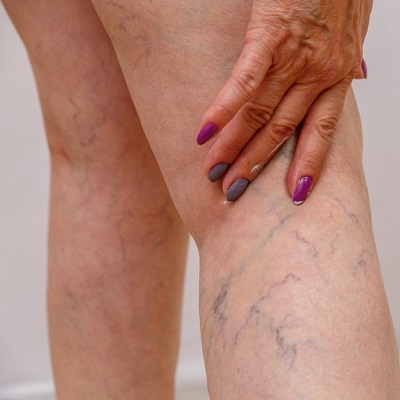
Quick Facts:
- Cost: Approx. 800 AED – 3,500+ AED for the standard treatments. Prices may vary for individual patients.
- Duration: 60 minutes for the complete appointment, including preparation and injections.
- Procedure Types: Minimally invasive cosmetic procedure for removing visible superficial veins.
- Success Rates: 80 – 90% successful reduction in the visibility of spider or varicose veins.
- Sessions: 2 – 5 sessions for the standard treatment course. 3 – 7 sessions for severe issues.
- Downtime: Minimal to no downtime with zero limitations or restrictions on routine activities.
- Pain Level: 2 – 4 on a 10-point pain scale. Manageable without any topical anesthetic administration.
- Effects Lifespan: Permanent destruction of afflicted veins with 3 – 5 years of aesthetic benefits.
Do you want to learn more about non-surgical solutions for enlarged or discolored blood vessels in different areas of the body that are visible through the skin? The skilled vascular specialists and dermatologists at Enfield Royal Clinic offer a range of solutions, including injectable procedures like Sclerotherapy in Al Ain, to treat these types of medical concerns and the various uncomfortable symptoms that are associated with them. Starting around 800 AED, these treatments for varicose and spider veins are easily accessible and very cost-effective for most patients. Continue reading for a more in-depth explanation of the different types, benefits, pricing, and other useful features of these treatments.
Table of Content
What Is Sclerotherapy?
An injectable treatment used primarily to block off or at least reduce unnaturally swollen and discolored veins, sclerotherapy is an effective solution for the prominent blood vessels that usually form just underneath the dermal barrier. These procedures are typically selected to treat both cosmetic and medical concerns, particularly specific conditions like varicose and spider veins. Although the specifics might differ slightly, most types of these treatments rely on chemical compounds that are injected directly into the afflicted vessels and react with the vascular lining to shut off and shrink the unwanted segments of said vessels. Sclerotherapy has numerous useful variants, each with distinct advantages and mechanisms, but before we discuss them in detail, we need to lay some essential groundwork.
Why Do We Need Sclerotherapy Treatments?
Telangiectasia and varicose or spider veins are vascular conditions that commonly develop with aging, due to a genetic predisposition, or because of hormonal and weight fluctuations. Most patients turn to sclerotherapy to manage the symptoms or discomfort caused by these conditions.
- Fade prominent blue or purple spider veins from the skin.
- Reduce swelling, burning, heaviness, or nighttime cramps.
- Improve blood circulation by closing off damaged blood vessels.
- Prevent severe complications like skin ulcers and blood clots.
Sclerotherapy Cost In Abu Dhabi:
The cost of sclerotherapy in Al Ain for the removal of dysfunctional superficial veins is usually somewhere in the range of 800 AED -3,500+ AED. Having said that, we would like to point out that these figures are only rough approximations. The actual prices of such procedures are typically based on factors that vary for each patient, such as their specific conditions, requirements, preferences, and specific expenses related to the equipment used, the specialist selected, and the methodology applied. The following table shows the expenses of some common sclerotherapy procedures.
| Treatment Types | 1 Session | 3 Sessions |
| Consultation Fee | 350 AED – 400 AED | 1000 AED – 1100 AED |
| Liquid Sclerotherapy | 200 AED – 1,500 AED | 1,800 AED – 4,500 AED |
| Foam Sclerotherapy | 600 AED – 2,500 AED | 1,500 AED – 5,000 AED |
| Direct Vision Sclerotherapy | 800 AED – 1,500 AED | 2,400 AED – 4,500 AED |
| Ultrasound-Guided Sclerotherapy | 1,500 AED – 3,500 AED | 4,500 AED – 10,500 AED |
Who Are The Ideal Candidates For Sclerotherapy?
Medical practitioners have found that certain types of patients have a higher chance of achieving satisfactory results after these injectable treatments. Typically, the experts identify the compatible individuals through a detailed process of tests, evaluations, and consultations. The best candidates for sclerotherapy, according to experienced skin specialists, have at least some of the following defining features.
(Please Note that these criteria can vary among different practitioners.)
- Good overall health, without any severe blood or heart conditions.
- Primarily small varicose veins, spider veins, and reticular veins.
- Mobile and active physical state and ability to walk independently.
- Willing to follow recovery guidelines and instructions consistently.
- Realistic expectations and clear goals for the procedures.
Who Should NOT Consider Sclerotherapy Procedures?
Skilled experts carefully examine their patients during the consultation phase before any surgical or non-surgical procedure to check for conditions or disorders that might complicate or compromise the treatment in any way. We’ve mentioned some of the common contraindications for sclerotherapy procedures in the list below.
(Please Note, the following are not a comprehensive catalog of all contraindications, merely some examples.)
- Pregnant or breastfeeding individuals.
- Active blood clots or pulmonary embolism.
- Known allergies to the sclerosant solution.
- Bedridden or incapable of lower-limb mobility.
- Systemic or acute skin infections at target sites.
Common Types Of Sclerotherapy Treatments:
Specialists have developed several variants of sclerotherapy, each with distinctive mechanisms and useful features, that help them address the different aesthetic concerns and vascular conditions of individual patients. The following sections explain a few of the variations generally preferred by experienced skin specialists.
Liquid Sclerotherapy:
Liquid sclerotherapy procedures generally rely on low-viscosity solutions of sclerosant chemicals, such as polidocanol or sodium tetradecyl sulfate. These methodologies are ideal for smaller, superficial veins but don’t work as well for vessels with any significant enlargement because they are usually diluted by the accumulated or pooled blood.
Foam Sclerotherapy:
Foam sclerotherapy treatments use a slightly modified sclerosant solution, specifically one that has been blended with some gas, usually regular air or CO2. The injected solution is usually in the form of a thick foam that displaces the blood to maintain better, longer contact with the vascular lining.
Ultrasound-Guided (ECHO) Sclerotherapy:
The ECHO sclerotherapy method uses standard ultrasound imaging techniques to locate blood vessels and guide the specialist’s needle accurately towards the problematic area, especially when the afflicted veins are hidden underneath the skin. Ultrasound makes the delivery of (either liquid or foam) sclerosants safer and remarkably precise.
Microsclerotherapy:
Microsclerotherapy resembles the methodologies for liquid and foam sclerotherapy, described previously, but at a lower scale to target the extremely small capillary networks on the surface of the dermis. These procedures use microscopic needles, tiny amounts of sclerosant solution, and different magnification and visual tools to guide injection positioning.
Cryo-Laser and Cryo-Sclerotherapy (CLaCS):
CLaCS procedures are advanced methodologies that combine various techniques, namely laser therapy, cryotherapy, and the basic liquid or foam sclerotherapy, to improve the precision, depth, and overall results of these treatments. CLaCS is preferred for targeting superficial and deep veins simultaneously with little to no discomfort.
Chemical Solutions Typically Used For Sclerotherapy:
Numerous chemical compounds are available that act as effective sclerosants and can be used for these procedures. The most useful active agents used for sclerotherapy treatments are mentioned in the list below.
Sodium Tetradecyl Sulfate:
Sodium Tetradecyl Sulfate is a powerful type of detergent or surfactant that attacks and breaks down the inner lining of the vein to trigger inflammation and collapse in the afflicted blood vessels.
Polidocanol:
Polidocanol is another, less potent, detergent that targets the endothelium of the blood vessels to force them to constrict and close up. It also has a numbing effect that makes its injections more comfortable.
Hypertonic Saline:
Hypertonic saline, consisting of a concentrated solution of salt and water, is an osmotic agent that pulls water out of the cells that make up the vascular walls to shrink the afflicted veins.
Chromated Glycerin:
Chromated glycerin is a less powerful chemical irritant that causes caustic or inflammatory reactions in the veins it comes into contact with and encourages swelling as well as shrinkage of the vascular lining.
Categories Of Veins Treated With Sclerotherapy:
Most types of blood vessels that need to be treated with sclerotherapy, i.e., enlarged and discolored veins, venules, or capillaries, form because of faulty or weakened valves inside these vessels that control the circulation of blood. Here are some of the common kinds of visible vascular conditions treated with sclerotherapy procedures.
- Spider Veins:
Tiny capillaries, venules, or arterioles with a thread- or web-like appearance on the surface of the skin that usually form due to vascular damage and have a prominent red, blue, or purple hue.
- Reticular Veins:
Reticular veins are about 1 – 3 mm in diameter with a blue, purple, or greenish color that sit flat underneath the dermal surface and usually supply blood to spider veins as feeder veins.
- Varicose Veins:
Varicose veins generally resemble spider veins in their webbing-like patterns, but they are raised and can grow much larger. These blood vessels often cause pain and discomfort, unlike the spider and reticular veins.
- Saphenous Trunks and Tributaries:
Saphenous veins are large and the main axial superficial blood vessels in the lower limbs, typically characterized by their location inside a specific layer of fascia known as the saphenous compartment.
- Vascular Malformations:
Vascular malformations are usually congenital anomalies that affect the blood vessels, creating abnormal tangles instead of the natural branching pathways and networks. They are usually visible as discolored lumps on the skin surface.
Key Stages Of The Sclerotherapy Procedure:
On average, a sclerotherapy procedure takes about 30 – 45 minutes for the main prep and injection processes, with the whole appointment duration falling somewhere under 60 minutes. Our sclerotherapy treatments usually involve the following basic steps, except for any personalized medical process.
Cleansing:
The practitioners ask their patients to stand up to encourage blood flow towards the affected veins and make them more prominent against the skin. They then cleanse all the areas that need to be injected with an antiseptic and create marks around the locations most suitable for injection placement.
Injection:
The specialists prepare the sclerosant solution and extract an appropriate, measured amount into sterilized syringes with very fine needles. They then physically stretch the skin tissue around a target region and inject the solution directly into the afflicted vein. They repeat this process for all of the marked areas.
Care:
The experts monitor their patients for a short period once the sclerosant has been injected to ensure there are no unexpected complications, specifically allergic reactions or bleeding around the injection sites. After this monitoring period, the specialists cover the target areas with a compression garment to keep veins collapsed.
The Complete Results Timeline For Sclerotherapy Procedures:
The final results of standard sclerotherapy can take up to 3 – 6 weeks to develop completely for smaller spider veins, and around 3 – 4 months for larger afflicted blood vessels. The table below details the complete timeline of different sclerotherapy results and how they develop.
| Phase | Time | Results |
| Side Effects | 12 – 24 Hours | Expect temporary mild redness, swelling, tenderness, or small raised bumps around the injection sites. |
| Initial Healing | 2 – 7 Days | Due to the start of the healing process, the treated veins might appear bruised and turn slightly darker or more visible. |
| Improvements | 2 – 4 Weeks | The bruising, swelling, and initial side effects slowly fade, and compression garments are used to keep the treated veins closed. |
| Peak Effects | 3 – 6 Weeks | Spider veins begin to show significant fading and typically disappear entirely as the healing progresses. |
| Final Results | 3 – 4 Months | The medium- or small-sized blood vessels usually take slightly longer to break down fully, but typically resolve completely within this window of time. |
Before And After Effects Of Sclerotherapy:
The following images show the appearance of a few of our patients before their injection procedures of sclerotherapy and after the completion of their recovery phase.
[insert relevant before-and-after images here]
Benefits Of Sclerotherapy Treatments In Al Ain:
Here are the key benefits of sclerotherapy.
- Minimal invasiveness and short duration.
- Little to no downtime or recovery requirements.
- Relief from physical symptoms of faulty circulation.
- Restoration of blood flow through healthier veins.
- Smoother and clearer skin texture and tone.
Potential Side Effects Of Sclerotherapy:
Here are some of the common side effects and risks of sclerotherapy procedures.
Expected Issues:
- Bruising
- Swelling
- Discoloration
- Lumpiness
- Matting
- Discomfort
- Migraine-like Symptoms
Serious Complication:
- Blood Clots
- Allergic Reactions
- Skin Ulcers
- Nerve Damage
How To Minimize The Adverse Effects Of Sclerotherapy?
Most common side effects mentioned above are temporary and subside within a few weeks with some care, adherence to recommended guidelines, and proper use of prescribed medication. For the rare and often more serious complications, a few prevention and minimization protocols are in place that all health-care providers are required to follow.
- Only board-certified and appropriately trained surgeons may perform cosmetic or reconstructive surgery.
- Patients must be screened thoroughly with extensive review of their medical history and current health conditions.
- Dermatologists, technicians, and support staff must maintain proper sterilization at all times during treatments.
- Patients must meet the minimal criteria of candidacy for injectable medical solutions such as sclerotherapy.
- Only tried-and-tested, reliable, and properly sterilized equipment should be used during all procedures, including sclerotherapy.
When Should You Call A Doctor After Sclerotherapy?
Specialists usually give their patients strict instructions to contact a doctor immediately if they notice any serious complications or unexpected symptoms. Experts particularly outline the following concerns as needing immediate professional attention and medical treatment.
- Sudden Leg Swelling
- Groin Inflammation
- Signs Of Infection
- Red Streaking
- Suspicion of Blood Clots
Success Rate Of Sclerotherapy For Specific Conditions:
Generally, sclerotherapy procedures have a remarkable success rate of 80 – 90% for treating most venous concerns, specifically the common types of varicose and spider veins. The following table shows a brief comparison of the effectiveness of different types of sclerotherapy for different venous or blood-related conditions.
| Concerns | Sclerosant Solution | Average Success Rate | Sessions Required |
| Spider or Small Varicose Veins | Liquid Solution | 80%-90% | 1-3 sessions |
| Medium or Large Varicose Veins | Foam / Microfoam Solution | 80%-95% | 1-4 sessions |
| Venous Malformations | Foam / Liquid Solution | ~86% | Varies by size |
Useful Alternatives To Sclerotherapy Procedures:
Practitioners have a variety of effective alternatives to sclerotherapy at their disposal, which they use frequently for patients who either don’t prefer or are not eligible for the injectable procedures described earlier. The following table compares a few of the favored options.
| Procedure | Mechanisms | Best For | Anesthesia | Recovery |
| Endovenous Laser Ablation | High-energy laser heat collapses and seals the vein from within. | Large saphenous and bulging varicose veins. | Local | 1 – 2 Days. |
| Radiofrequency Ablation | Radiofrequency energy generates controlled heat to shrink the vein wall. | Great saphenous and major superficial veins. | Local | 1 – 2 Days. |
| Medical Adhesives | Advanced cyanoacrylate medical glue permanently seals the vein. | Saphenous or major superficial veins. | Local | Same Day. |
| Transdermal Laser Therapy | Laser light beams penetrate through the surface of the skin to constrict the target veins. | Fine red/purple spider veins and facial thread veins. | None or Topical Numbing Creams | Same Day. |
| Ambulatory Phlebectomy | Physical extraction of the veins through tiny 1 – 2 mm micro-incisions using a surgical hook. | Large, twisted, bulging surface varicose veins. | Local | 1 – 3 Days. |
Why Choose Us?
At Enfield Royal Clinic, our skilled skin specialists are committed to safe, strategic, and conservative solutions for the common aesthetic needs and skin concerns of our patients. Thousands of individuals trust our professional services for the removal of their varicose blood vessels. Here are a few reasons behind the confidence they have in our treatments.
- 10+ years of excellence in cosmetic dermal treatments and skin care.
- Over 1500 successful sclerotherapy procedures with satisfactory results.
- Highly tailored non-invasive techniques for the specific needs of each patient.
- Well-qualified skin experts with more than 15 years of practical experience.
- Professionals dedicated to the safety, comfort, and privacy of all patients.
- Clear, reasonable prices for varicose or spider vein treatments.
- A dedicated team of dermatologists, nurses, and friendly staff.
Erase The Unpleasantly Visible Superficial Veins From Your Skin!
You can get the most effective solutions for your aesthetic and medical concerns with our professional team of skin specialists and estheticians (which includes Dr. Muhammad Jan, who has more than 7 years of experience as a dermatologist) and their vast roster of reliable and innovative solutions (such as the procedures for sclerotherapy in Al Ain). Fill in the form below and schedule your appointment with one of our specialists today. You can also contact us on our helpline or through WhatsApp to get reliable information and professional support.
FAQ’s:
Can The Sclerotherapy Treatment Remove Deep Varicose Veins?
Yes, sclerotherapy procedures can be used to treat deep varicose veins. But the practitioners need to use some specialized techniques like ultrasound guidance to direct the needle safely through the deeper tissue and deliver the treatment solution accurately where it is needed.
Does Sclerotherapy Prevent Recurrence Of Spider Or Varicose Veins?
Sclerotherapy procedures are effective for closing and eliminating specific afflicted veins, but they can’t provide any immunity against the formation of new varicose or spider veins. These treatments are useful for managing symptoms but cannot target underlying causes of such issues.
What Areas Can Be Treated With Sclerotherapy Procedures?
Specialists use sclerotherapy on areas of the body that are most prone to varicose and spider veins, particularly different regions of the legs, face, hands, chest, and feet. Certain delicate areas, particularly around the face, require some specific, minor techniques for sclerotherapy.
How Painful Are The Standard Treatments For Sclerotherapy?
Most patients report minimal, short-lived, and easily manageable discomfort during standard sclerotherapy, rather than any sharp or lasting pain. The injection process itself feels like tiny pinpricks, though the solution causes a brief burning or stinging sensation when it enters the vein.
How Long Should Patients Use Compression Garments After Sclerotherapy?
Patients are generally advised to wear compression garments for the first one or two weeks after their sclerotherapy to minimize swelling or fluid buildup at the injection sites, encourage circulation, and keep pressure on the collapsed veins to keep them closed.
Which Kinds Of Activities Should You Avoid After Sclerotherapy?
Most skin specialists cite strenuous exercise and exposure to extreme heat as the main things to avoid for a few weeks after sclerotherapy to protect the healing tissue and prevent complications. However, regular light walks are encouraged to maintain healthy circulation.
Are The Results Of Sclerotherapy Treatments Permanent?
The specific afflicted veins that are treated through a sclerotherapy procedure are closed off permanently and reabsorbed naturally by the body. However, these treatments cannot prevent new varicose or spider veins from forming due to common age, genetics, pregnancy, weight, or lifestyle-related triggers.
How Are The Solutions For Sclerotherapy Administered?
The chemical solutions used in sclerotherapy, which irritate the lining of blood vessels to swell them shut, are typically delivered via intravenous injections directly into the target veins. For the treatment of particularly deep varicose veins, specialists often use ultrasound-assisted injections as well.
What Are The Common Side Effects Associated With Sclerotherapy?
Most experts consider sclerotherapy techniques to be generally safe, with very few and usually temporary side effects, for the majority of patients. The side effects that should be expected include mild bruising, itching, burning, hyperpigmentation, injection-site reactions, allergic reactions, infections, etc.







 Start
 Chat Now

